Drilling Fluids Shale Shaker and Mud tank for Offshore Drilling Company

As the crude oil price is increasing stably, the numbers of active drilling rigs is on a rise, too. Among which, quite a lot are offshore rigs working on offshore platforms. Under the oceans, the crude oil reservation is remarkable, and lots of oil companies are joining to the offshore drilling industry. In order to take into consideration of environment protection purpose while drilling, the drilling mud shall be treated in time and to leave the waste to the least.
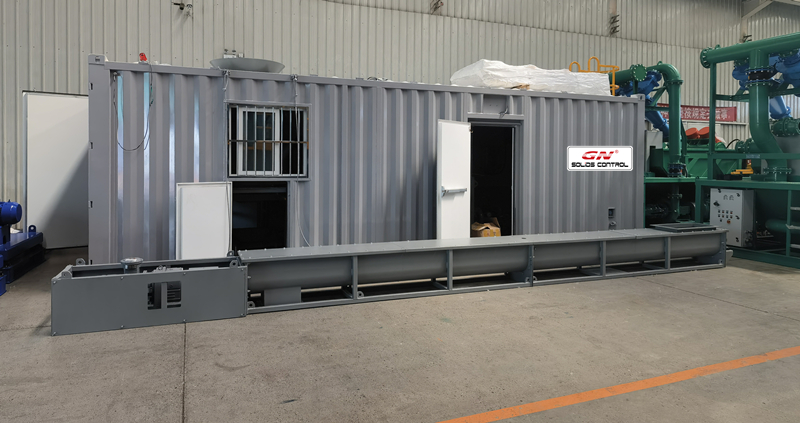
GN Solids Control has been providing offshore drilling companies for years with the high quality and compact designed mud recycling system. Here is information of a recent project:

2022.02.17 Offshore Mud System

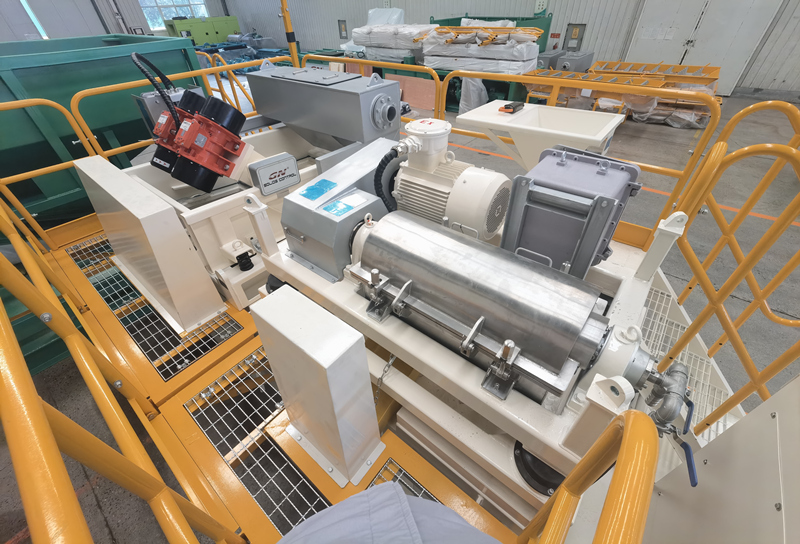
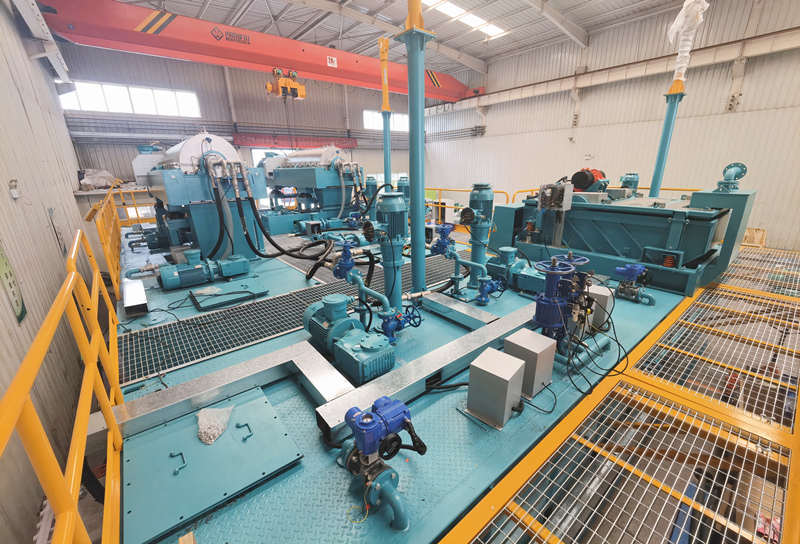
1. In this project, the main equipment is shale shaker. Shale shakers are most important for a drilling mud system, which remove most solids particles from the recycled drilling mud. GN has different models of shale shakers, from the mini shale shaker with 2 pcs of screens to the double deck shale shaker with 2 layers holding 6 pcs of shaker screens. Each shale shaker is equipped with 2 vibrating motors, with total power less than 4kw. And the feeding for shale shaker is easy cause the mud flows directly from drilling. There is even no need for an extra pump.

2. Mud tanks are another main component for this system. They are used to receive the clean mud for next cycling. By using the jet mud mixer along with the tanks, the new chemicals can be added into the mud system.
It is clear that there are no desander or desilter cones in this system, for one thing, comparing with shale shakers, the desanding or desilter cyclones are less efficient. For the other, both desander and desilter cones need large power centrifugal pumps for feeding.

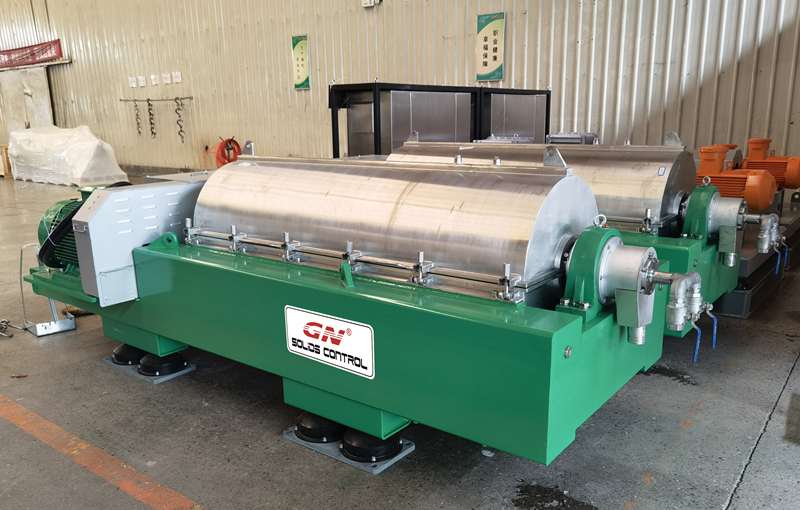
In this case, the client can collect the drilling solids waste to a vertical cuttings dryer or decanter centrifuge for drying before discharge. And also the drilling fluids can be retreated by decanter centrifuge when there are fine particles in the fluids after several cycles.

For more information, welcome to contact GN directly.

GNMS-1500D Mud Recycling System Deliver to Clients in Asia

Normally, GN Solids Control recommends 4 stage separation systems for TBM or pipe jacking projects for a thorough treatment of drilling mud. In some cases, based on clients’ customized requests, GN Solids Control can also make 2 or 3 stages separation units in a compact design. For example, the GNMS-500D and GNMS-1000D are both quite popular products during the years. And recently, GN just delivered several sets of GNMS-1500D to some clients in Asia.

IMG_20220118_105415

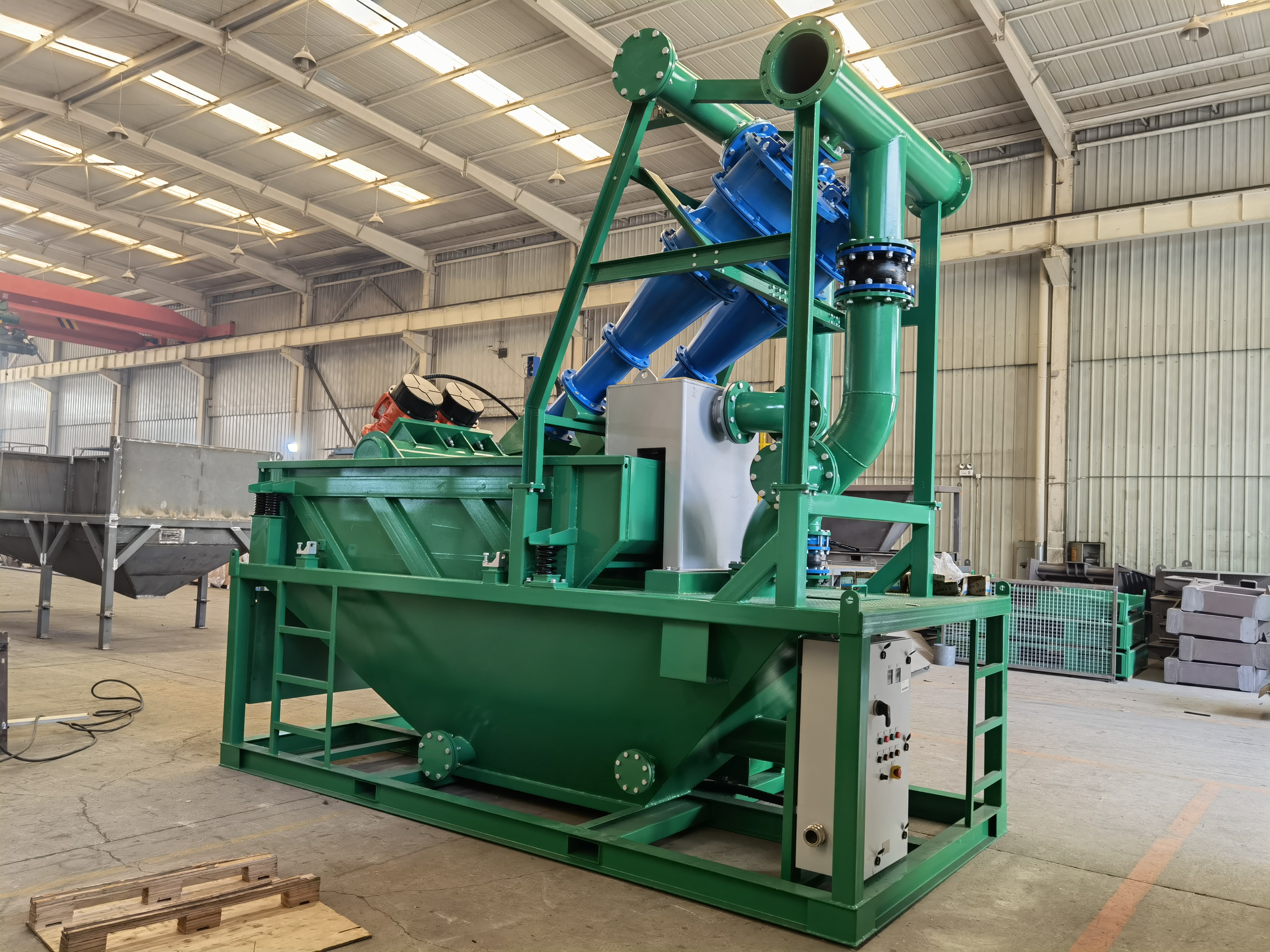
1. GNMS-1500D Mud Recycling System is designed and manufactured according to the needs and requirements from customer, which is appropriate for mud treating & recycling in mining industry, piling works, HDD(horizontal directional drilling) and so on.

2. The treatment capacity of this system is up to 360m³/h. This system includes 2 stages of solids control and separation. The first-stage separation is the shale shaker part of double deck shale shaker & desander.

3. The second-stage separation is the desander part of shale shaker & desander fed by a large powered centrifugal pump. Centrifugal pump gives enough power to the desander cyclones and mud is separated into liquid and solids by centrifugal force inside the cyclones.

4. Inside the catch tank, there is a device to prevent dry-run of the centrifugal pump, for mud compensation and preparation.

Function of GNMS-1500D:

During drilling, the drilling mud contains lots of sand and silt. This recycled mud is transferred to GNMS-1500D’s inlet pipe and solids phase larger than 40μm are removed by the mud recycling system. In this way, clean drilling mud is returned to the rig/pipe jacking machine.

If you or your clients have similar projects, or if you or your clients need more information from GN professional team, welcome to consult from GN freely. GN Solids Control is located only 40 km from Beijing, the capital of China. And GN has branch companies in Houston, TX, USA and also in Moscow, Russia.

Mud Recycling Systems for TBM Projects

TBM Projects are very common during any countries’ infrastructure building. And the mud recycling systems are always requested during TBM projects. Similar as all other drillings, there is drilling media to be invited into drilling procedures, and the drilling media, which is also called drilling mud should to be recycled after work and to be returned to drilling after being separated by a mud recycling system.

2021.11.08 GNTBM-360 Separation Plant

Here are some of the functions of such a mud recycling system for TBM:

1. Such a mud recycling system can provide high-quality bentonite slurry required by shield tunneling construction to the closed chamber of the excavation face of work.

2. An efficient mud recycling system can make the specific gravity, viscosity and other technical indexes of the slurry in order to meet the requirements of forming mud film and stabilizing the excavation surface in the highly permeable sand layer.

3. A mud recycling system for TBM can help to transport the mixed mud formed by cutting soil and sand to the ground for separation and treatment, and then adjust and utilize the recovered mud.

4. The mud recycling system is used to support, stability and excavation surface soil. The shield tunnel face produces drilling mud balance effect with the help of mud pressure and the front earth pressure to effectively support the front soil.

5. The mud recycling system can also cool and lubricate cutting equipment such as cutter head and cutter head. It is kind of protection.

6. According to the different requirements of soil permeability coefficient, reasonably match the grade of mud particles.

GN Solids Control has been providing mud recycling systems for TBM contractors and projects for more than 15 years, and has gained rich experiences in designing and manufacturing. Among GN products, there are compact systems with 2 separating steps and complete systems with 3 separating steps. GN engineers can give more suitable suggestion based on your detailed information.

Pipe Jacking Slurry Separation Desander Plant for Asia Client

By end of last year, GN Solids Control have got many new orders from Asian clients for the mud separation desander plants. Mud separation desander plants are always GN Solids Control’s advantaged equipment. They are combined by different separation facilities based on client’s jobsite conditions and plant sizes. Just recently, GN Solids Control has delivered following desanding plants:

2022.01.18 GNMS-1500D Desander Plant 2

1. Four sets of GNMS-1000D slurry separation desander plants for pipe jacking projects. Pipe jacking works can be grouped into TBM projects. They are widely used for subway construction or so, and during drilling or jacking, there are slurry generated. Those slurries contains sands and soil which should be removed as thoroughly as possible. GNMS-1000D slurry separation desander plant is a middle sized one among GNMS series slurry plants, which serves a capacity of 1000GPM. It has 2 nos of 10 inch desander cyclones and a double deck shaker. And those cyclones are fed by a 45kw centrifugal pump located under catch tank, on a same skid.

2. Three sets of GNMS-1500D slurry separation desander plants. GNMS-1500D is the big brother of GNMS-1000D in a same family. Comparing with GNMS-1000D, GNMS-1500D has 2 bigger cyclones, each of 14 inch diameter, and a larger double deck shaker with more screens. The 2 big cyclones are fed by a 75kw centrifugal pump.

3. GNTBM-240 separation plant. Unlike GNMS-1000D or GNMS-1500D, the TBM 240 is used for larger project. It has 3 steps for separation, shale shaker, desander and desilters. All machines are controlled by a single big control panel, and the machines are located in 2 layers in order to save space.

If you have similar project or need more information, welcome to visit GN website and contact GN sales team directly.

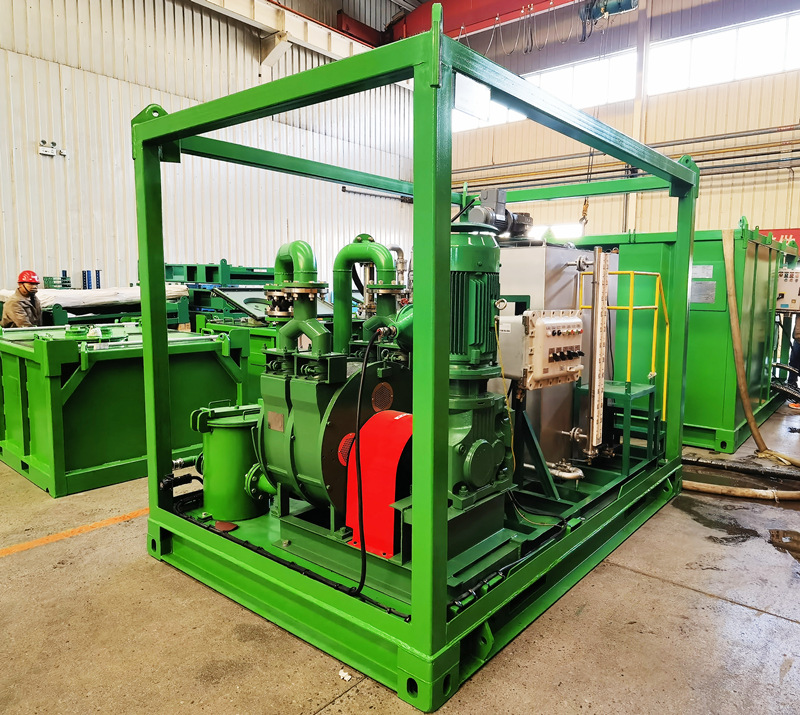
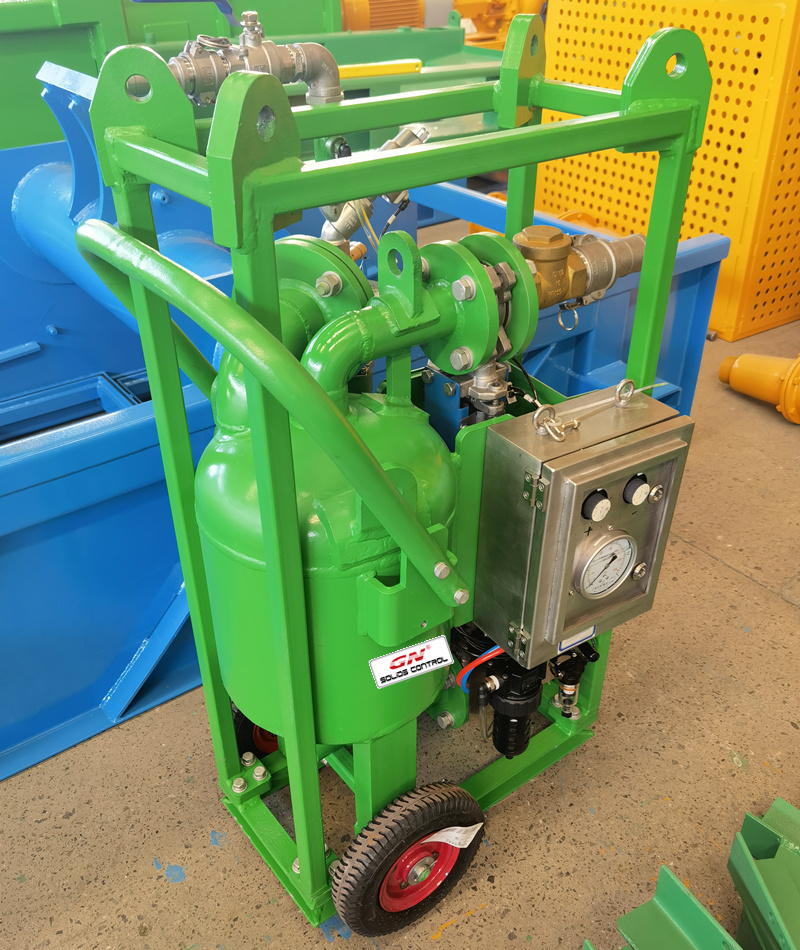
How to Operate on a Vacuum Pump to Its Best

As is known to all, a vacuum pump is a powerful pump which is suitable for different applications. Because it can transfer material with large particles or large solids content, it is also called a solids pump. It is fully air-driven by connecting to an air compressor. The working principal is to suck in the material with the negative force and push the material out with a positive force.

2021.08.24 Vacuum Loading Pump
If it is operated in correct method, it can reach a quite ideal performance. Here are some tips:

1. Suitable air supply for the vacuum pump:

There are 2 requests to meet for the air compressor: pressure between 0.6~0.8 Mpa, and a large enough air volume.
In some cases, although the air compressor can produce an air pressure of 0.6 Mpa or above, during operation, reading on pressure guage is only 0.4 or 0.5Mpa.
This problem could be solved by reducing the air hose length from air compressor to the pump, or using a larger diameter air hose.
Another option is an air container. Since the ideal operating air pressure should be stable around some value between 0.6 to 0.8 MPa. In some cases, when the air supply from an air compressor is not stable, you can use an air container matching to the air compressor. It is located in between the compressor and pump.

2. Time setting for loading and discharging:
For both loading and discharging, there is a time range from 0 to 30 seconds. This time setting can be adjusted during operating, which depends on many factors including material character, distance, pipe diameter and etc.
For example, if the sucking time is set at 25 seconds, and when pump is sucking, at first the material goes quite quickly, then it slows down gradually.
When the material moving nearly stops, the pump is almost full. You read the time and you can set the sucking time accordingly.
During discharging, make sure the material is fully pushed out from the discharging hose. Don’t leave heaps of material to stop at half. In that case, it will hinder the later sucking and discharging.
You can contact GN Solids Control, the vacuum pump manufacturer, for more information.

How to Choose Suitable Mud Tank Volume for Diamond Core Drilling and Geothermal Drillings

As is common sense for all kinds of drillings: 1, Drilling mud should be invited into drilling procedure, 2. The drilling mud should be treated after the drilling procedure, considering both economy reason and environment protection.
Well, do you know how to choose a suitable tank volume for such diamond core drilling and geothermal drillings? Here we have some tips and useful sequences to follow:

1. The required mud flow should be determined according to the drilling structure and drilling tool type;
2. Select the appropriate mud pump for the core drilling or geothermal drilling rigs.
3. Fully take consideration of required drilling rate and the time needed to prepare the mud.
4. Take into consideration of the solids control system (the mud separation equipment)’s recycling speed, including the rock powder carrying rate. This factor does affect the needed mud tank volume quite a lot.
5. Also consider the normal circulating mud volume, cross slurry distribution capacity and reserve mud capacity;
6. On the premise of meeting all above mentioned factors, try to select a smaller reserve coefficient, in order to reduce the amount of mud, which will also reduce the treatment capacity of waste mud.

2 2021.11.24 Drilling Mud Centrifuge

What solids control equipment is always needed in such drilling projects?
A diamond core boring or geothermal drilling always need a comparably smaller mud recycling system comparing with other drilling like oil and gas or even HDD. Such mud systems are always more compact, with only necessary and efficient equipment.
A shale shaker is a must, cause shale shaker always removes the most solids from the drilling cuttings. In order to save space without sacrificing separating capacity, operators prefer to use a double deck shale shaker at this stage. And after the shale shaker, there should be a desilter and a decanter centrifuge, among which, the desilter is optional while centrifuge is preferred.
Welcome to contact GN Solids Control engineer team for a more complete solution.

How to Choose a Suitable Mud Tank System

Unless the old type of crude oil explorations as shown in the movie <There Will Be Blood>, in modern times, the drillings are much gentler and it takes care of environment very well. And this can attribute to the employment of solids control system. The solids control system can help to remove the solids particles generated from drilling and also return the expensive drilling fluids back to the drilling procedure

For confirming the specifications of a mud tank system, here are several steps:

1 2021.11.24 Mud Tank System

1st, to confirm the volume of mud tanks, there are several points to be taken into consideration:
1.1 the drilling structure, the drilling mud replenishment when tool is lifted or the overflow when the tool is lowered during drilling
1.2 the mud pump’s rated displacement volume.
1.3 the drilling speed of the project, especially the drilling speed of large-diameter topsoil;
1.4 the well bore’s complexity should be taken into consideration, for example, whether there is lost circulation and blowout risk, or whether it is necessary to reserve a variety of mud;
1.5 the type of drilling mud used and speed of drilling mud preparation.

2nd, How to define the minimum drilling mud volume used for oil and gas drilling.

2.1 international API method 1: well bore volume with 100 barrels added. One barrel in the US system is about 158.97 liters in the metric system, and 100 barrels is about 16 cubic meters.
2.2 international API method 2: Daily footage (well barrel volume) ‘s five or 6 times. The coefficient is usually 5.5.
2.3 international API method 3: maximum circulating capacity of mud pump multiplied by 0.618. The unit of maximum circulating capacity of mud pump is m3 / min. this calculation method mainly considers that bubbles in drilling fluid can fully overflow the liquid level, and the calculated result is the liquid level area (unit: m2).
2.4 domestic method 1 in China : well barrel volume * 1.5 ~ 2.0. with common coefficient as 1.75.
2.5 domestic method 2 in China: nominal drilling depth of drilling rig ÷ (20 ~ 22) * 130%. The common coefficient is 21.

Hope the knowledge we shared is useful for your work.

Three Oil Rig Drilling Waste Management Equipment for Nigeria Drilling Company

Just recently, GN has delivered three complete sets of oil rig drilling waste management equipment for a drilling company in Nigeria. In Nigeria and other African countries, there are strict laws to regulate the drilling activities especially when taking environment protection in consideration. In Nigeria, along with each drilling rig, there should be a complete set system for waste management, including drilling cuttings waste management and drilling fluids separation.

Drilling cuttings are mainly from the shale shaker. Shale shakers take the heaviest burden in a solids control system, removing most and largest solids particles. But there is one problem that the cuttings discharged from the shale shaker are always quite wet. The cuttings must be well treated before discharge. For one thing, if the wet cuttings are discharged directly, the chemicals on cuttings will damage the environment badly. For the other, the liquid phase on cuttings is drilling fluids, which are quite expensive. Disposal of them means disposal money.

2021.12.11 Vertical Cuttings Dryer

GN has an efficient solution to help solve those problems:

1. GNCD930 Vertical cuttings dryer. This is used for reducing the oil on cuttings, which means, to dry the cuttings before disposal. In this way, the OOC could reduce to below 0.5%. It is quite popular for oil based mud cuttings’ treatment。

2. GNLW363 Decanter centrifuge. After the vertical cuttings dryer, the liquid phase still contains lots of fine particles, and not clean enough to be return to the drilling system. In this case the high speed decanter centrifuge is used to remove the fine particles from the liquid phase discharged from vertical cuttings dryer.

3. Telescopic skids for both decanter centrifuges and vertical cuttings dryer to allow the liquid phase to fall directly to their containers

4. Feeding and conveying equipment for the GNCD930 vertical cuttings dryers and GNLW363 decanter centrifuges. In a complete waste management system, there are screw conveyors for feeding the vertical cuttings dryer and screw pumps for feeding decanter centrifuge.

In this single PO, there are 6 sets of high speed centrifuges, 3 sets vertical cuttings dryers, 15 screw conveyors and 6 screw pumps included.


35000bbl Liquid Mud Plant for International Drilling fluids Service Company

There was a big day in last week for both GN and GN’s client who purchased such a big liquid mud plant, cause all those 70 units of mud tanks were transported to the loading port from GN factory located near Beijing City. It was the repeated order from the client since he issued a trial purchase of 15 sets of tanks in last year. He was happy to see the high quality from a responsible manufacturer.

This client’s business is in field of drilling fluids service, by collecting the used drilling fluids, recycling the useful portions and getting the fluids to be well prepared for new projects. He has a huge space for storage and in need of huge mud tanks and necessary equipment for separation. GN Solids Control provides him a turn-key solution with following equipment:

6 2021.11.27 Liquid Mud Plant

1. For drilling fluids separation: client chose 3 main equipment from GN product gallery for his drilling fluids separation: GNZS594 shale shaker, GNLW452D middle speed centrifuge and GNLW363C high speed centrifuge. GNZS594 is a linear motional shale shaker with 4 pieces of shaker screens. GNLW452 is a big bowl centrifuge with middle speed, that is used for barite recovery or to choose out the particles between 5 to seven microns. And the high speed centrifuge with a rotation speed upto 3900RPM, it is for fine and extra fine particles from 2 to 5 microns.

2. If the separation equipment are used for moving out, the mixing units could be regarded the facilities for adding in. This system contains 4 sets of mud mixing hoppers with jet mud mixing centrifugal pumps for adding in the useful chemicals when preparing the drilling fluids.

3. Mud tanks for storage with a total volume 35000 bbl.

Welcome to contact Renee@gnsolidscontrol.co directly for more information.

Drilling Rig Solids Control Equipment shippped to Oilfield Service Company

Solids Control systems and equipment are quite important for a successful drilling project. An efficient solids control system can helps to remove solids particles out of the drilling mud. In this way, the expensive drilling mud could be reused in future drilling. What is included in a complete solids control system?

2021.11.18 Shale Shaker

A complete solids control system, especially for a large power horse drilling rig, should have following equipment divided per tanks:

1. The trip tank. Per certain rig size, there should be a certain amount of drilling mud to be prepared, but during drilling, there is always some mud loss because of drilling or because of mud separation. So there should be a trip tank holding well prepared mud for compensate the mud loss. For the trip tank, there is always a mud agitator and a centrifugal pump as trip pump.

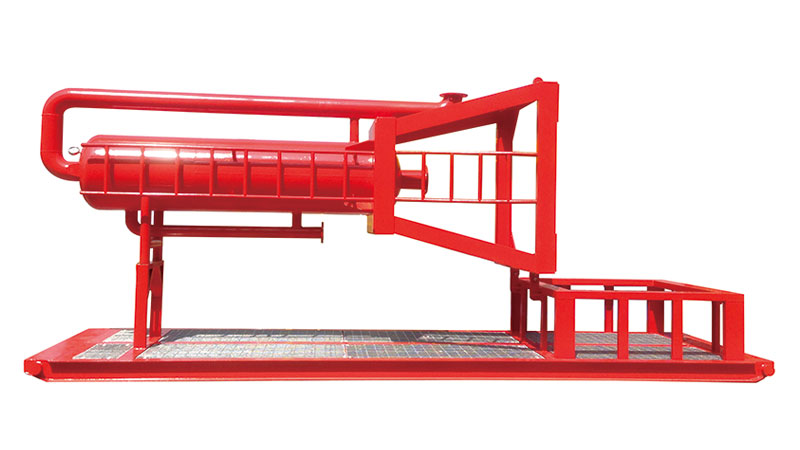
2. Settle tank or also called the shaker tank. Shale shakers are the first step separation of the solids control system, they are used to remove the most solids from the drilling mud with suitable vibrating G force and screen mesh. On a long shaker tank, after the shale shakers, there should be a degasser to remove the bubbles generated during drilling to ensure the safety and to protect the pumps in following steps. If there is a mud cleaner in this system, it should be on this tank, too. A mud cleaner is a combination of desanding cones and desilter cones fed by centrifugal pumps.

3. Active tank. It is a tank for decanter centrifuge. The decanter centrifuge is located after the mud cleaner, to do the barite recovery or fine particle separation. It is always fed by a submersible slurry pump or a screw pump

4. Suction tank for mixing and reserve tank for storage.

For more information, welcome to contact GN directly.