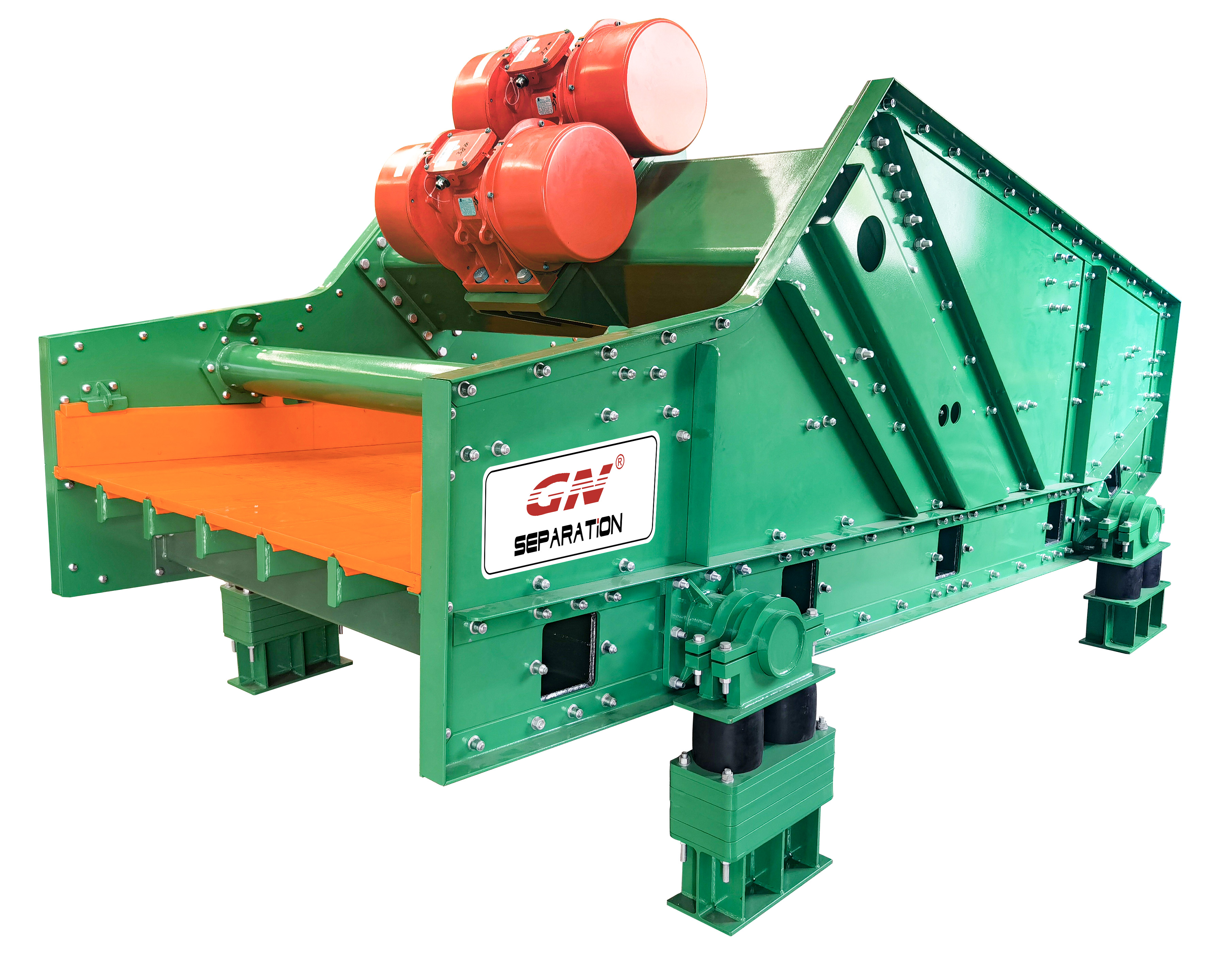
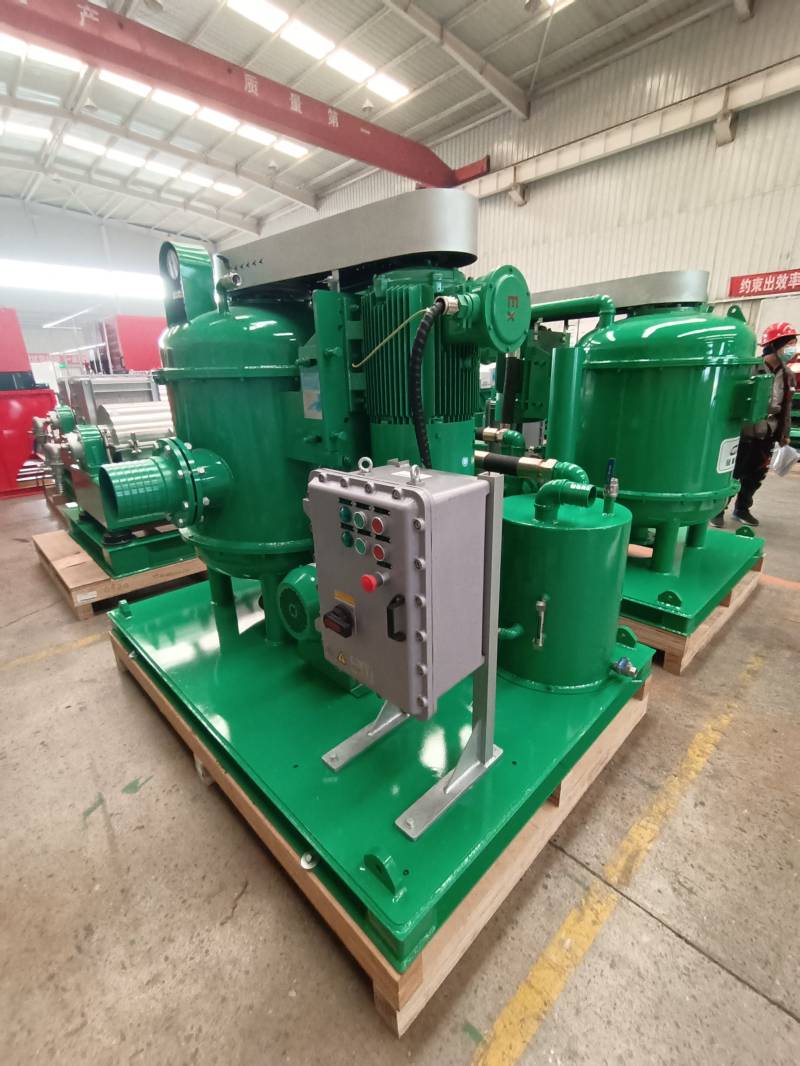
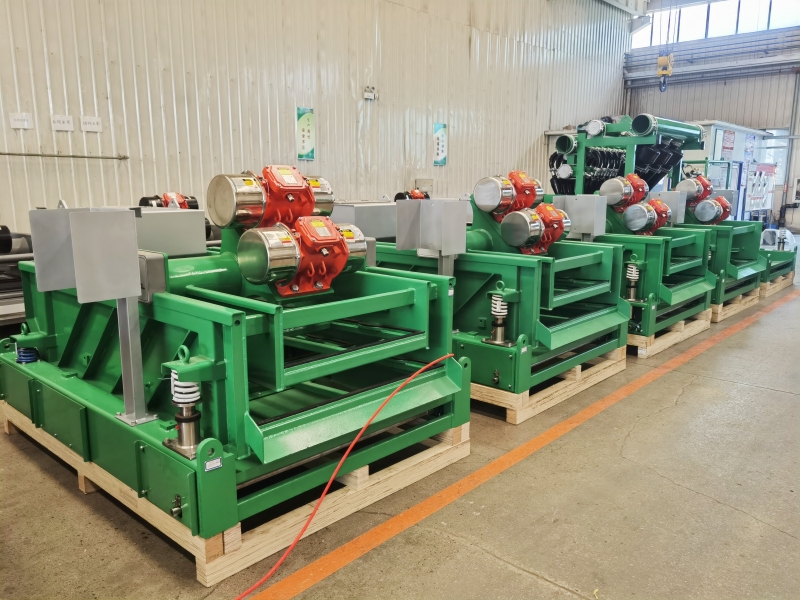
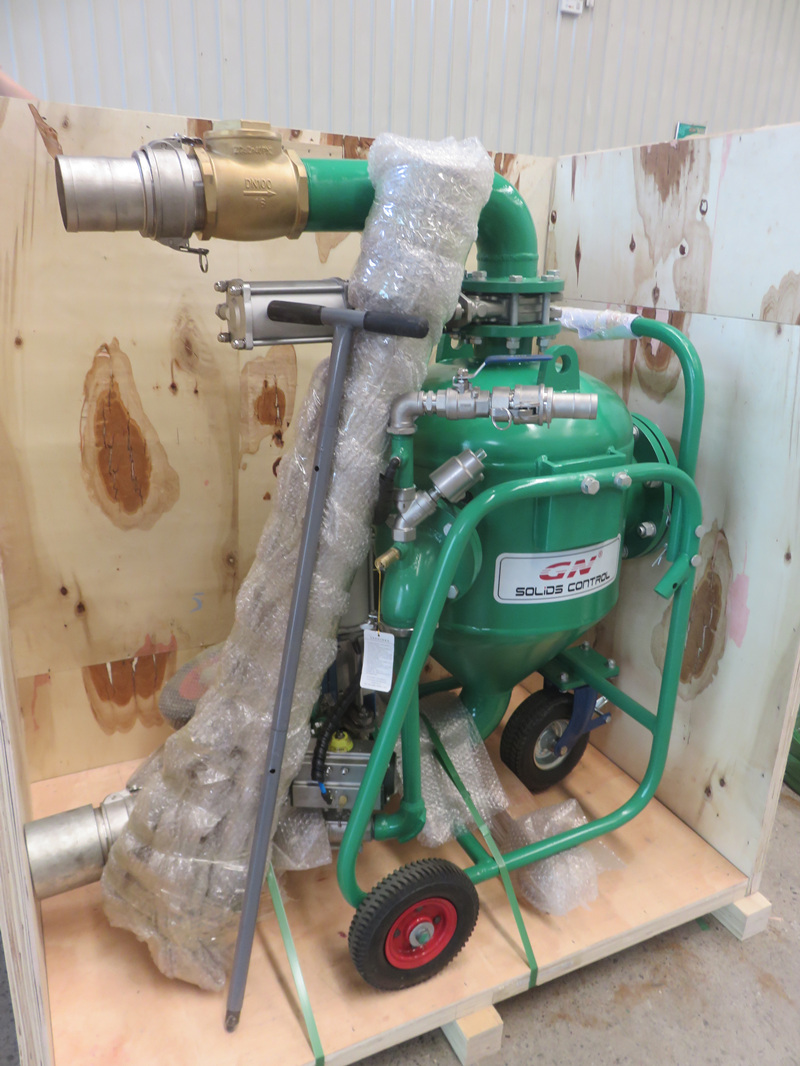
Equipment Used for Feeding and Discharging for Decanter Centrifuges

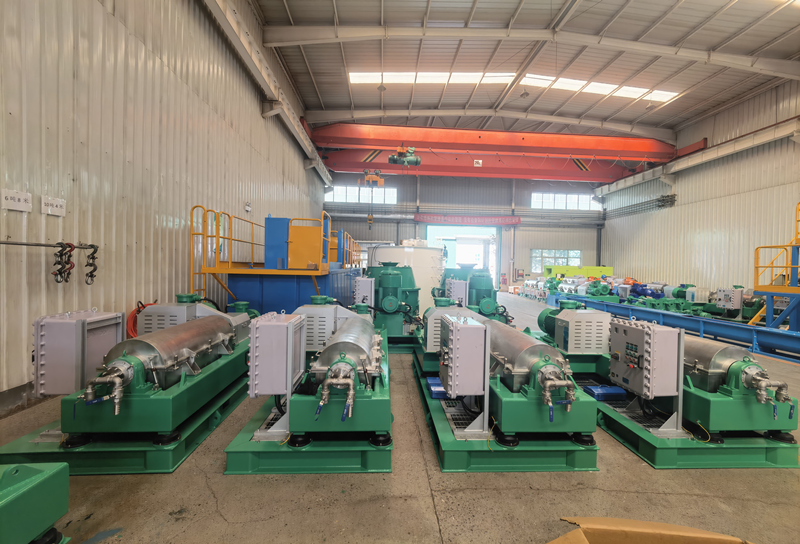
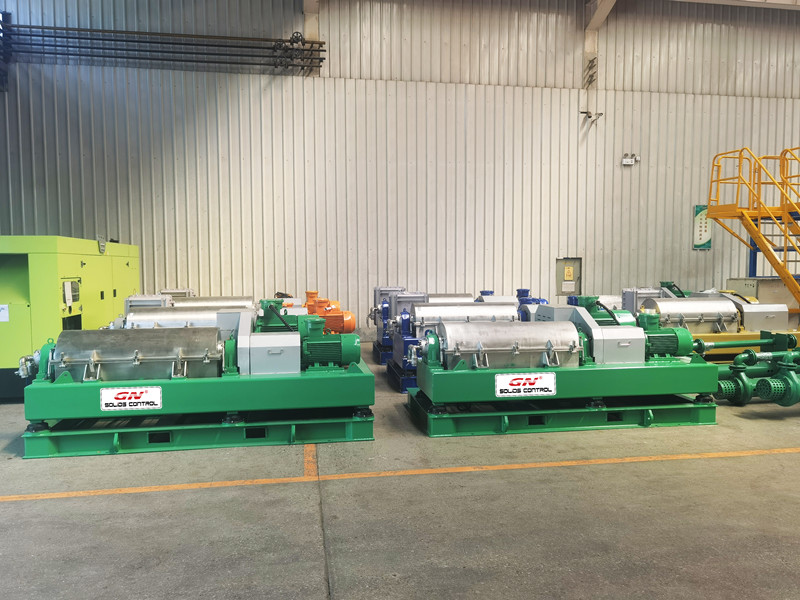
Decanter centrifuges are quite important and efficient equipment used for separation of liquid and solids only second to the shale shakers. By the high G force generated by the high speed rotating of centrifuge bowl, the liquid will be splashed and the solids phase is to be pushed out. For achieving a satisfactory separating result, we have to make sure there are suitable equipment for feeding the decanter centrifuge and some other facilities for discharge.
Decanter centrifuges request for stable feeding, so some pulse pumps are not suitable for feeding the centrifuges. The pump shall provide stable feeding capacities. And it would be better if the feeing volume can be adjusted as per the centrifuge speed.

2022.05.11 GNLW454ET Decanter Centrifuge 1

Normally, based on rich experience as a decanter centrifuge manufacturer, GN Solids Control normally suggest those two pumps for centrifuge feeding as below:

1. Screw pump, which is a kind of Mono pump. Inside the screw pump there are one stator and one rotor and the comparative move between them provides stable feeding volume for the centrifuge. GN VFD centrifuges’ control panels can include a control panel for the centrifuge feeding pump.

2. Submersible slurry pump is also used for centrifuge feeding purpose, mostly for constant speed centrifuges, especially when the centrifuge is located on a tank and when the tank’s space is limited.

GN has both pump types available for matching different centrifuge models.

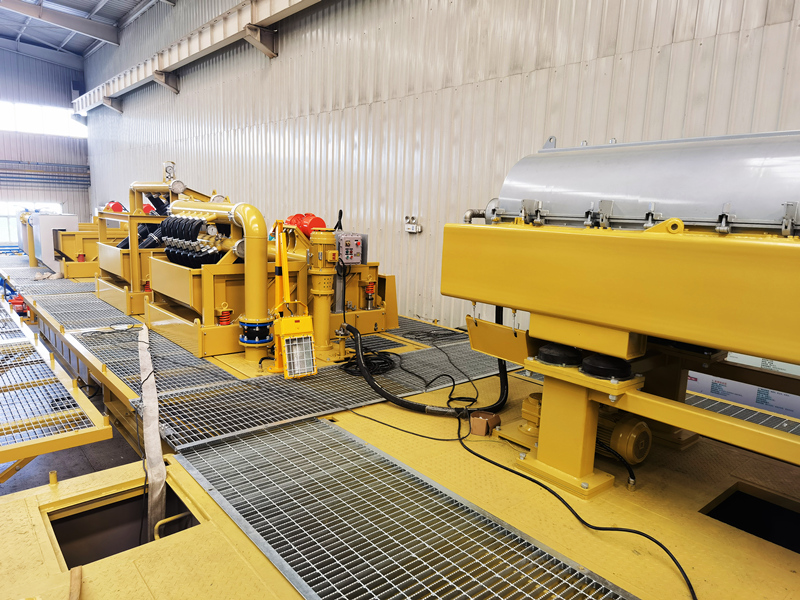
For centrifuge discharge, normally the liquid phase after separation will flow directly to its containers with a level difference. That’s why the centrifuge is requested to be mounted on a certain height, for example, on a tank or on a skid. The solids phase discharged by the centrifuge can flow directly via a chute or be carried out by a screw conveyor below the centrifuge.

For more information, please contact renee@gnsolidscontrol.com.

GN Solids America Successfully attend 2022 Offshore Technology Conference in Houston

Just days ago, GN Solids America, attended 2022 Offshore Technology Conference in Houston, bringing GN popular products together with their peers from USA and European countries, and attracted clients all over the world. For this year’s OTC, GN Solids America brought shaker screens, vacuum pump and ViST vacuum shaker screen to the exhibition. Those are all quite popular products among GN’s products.

2022.05.04 OTC Gate AD

1. Shale shakers. As a professional shale shaker manufacturer, GN also pays a great attention to the shaker screens, cause a shale shaker’s good performance is greatly affected by the shaker screens. And shaker screens with accurate API number can ensure a good separation and a high conductance is a must for reaching the requested treating capacity. GN shaker screens have the both features. Meanwhile, GN shaker screens have a long service life and reasonable prices.

2. Sludge vacuum pump. It is also called a solids pump, cause it can transfer large solids or even all dry solids like sand and mud. It can be used in various applications, such as oily sludge transferring, animal waste, industry slurry, sand and etc. It can suck from a long distance and discharge even longer. And, it is not driven by any electricity, instead, it is fully air driven, so it is suitable for all Explosive proof requests.

3. ViST vacuum shale shaker, which is used to reduce the drilling waste from the shale shaker. It is fixed onto the last piece of shale shaker, and it is suitable for WBM, OBM and SBM. It helps to reduce waste by 30%-50% and one set of ViST can serve for 1 to 3 sets of shale shakers.

If you missed the OTC, welcome to GN office and warehouse in Houston for more information about the company and products.

Automatic Mud Tank Cleaning Unit for Offshore Drilling Platform

As is known to all, the crude oil is not only located beneath the lands, but also under the sea and the under-sea crude oil reservation is quite large. So for oil and gas drilling, there are land rigs and offshores. Comparing with land rigs, there are some challenges an offshore project has to face, and tank cleaning is one of them.

After being used for quite a while, the mud tanks all have sticky material on the bottom, which are mixtures of oil, water and solids. Such mixtures are difficult to remove. Here a professional and efficient tank cleaning system is quite important.

2022.04.07 Automatic Tank Cleaning

GN Solids Control, as a leading brand of such separation solution provider, has a turn-key solution with an automatic tank cleaning system, which helps to save the labors to enter the tank for cleaning. GN tank cleaning system includes following sections:

1. A flushing gun. It is an automatic flushing gun which can use water and work at a high pressure to stirring the oily sludge on inner bottom of tank. It saves around half of the time comparing with human labor working hours for the same task. Such a tank cleaning system can be equipped one or two flushing guns.

2. Mud suction unit. By using this suction unit, the sludge can be removed easily out of the tank. And this powerful suction unit can handle sludge with large particle sizes or high content of solids.

3. Mud clarify unit. After the mud is transferred to outside the tank, it should be clarified professionally. Here GN uses an inclined plate classifier and a chemical dosing unit to reduce the viscosity of the sludge.

4. Unit for storage and transfer mud. After separated, the water will be recovered for reuse and the oil will be collected while the solids phase will be removed and discharged safely.

5. Waste cuttings box for collecting the discharged solids, and those boxes are designed with forklift facilities.

The Function of a Poor Boy Degasser

Poor boy degasser is also called a mud gas separator, it is a quite important equipment used for oil and gas drillings. As is known to all, as the crude oil or gas are both flammable materials. And during the drilling procedure, along with the drilling mud, there are cases that the flammable gas comes out with the drilling mud. It will put the whole jobsite in danger. A poor boy degasser here is used to remove such flammable gas to ensure the safety work.

1. Where is the poor boy degasser located?
A poor boy degasser is always located beside the 1st mud tank, quite near to the mud distributor for the shale shakers, cause the mud outlet of the poor boy degasser shall be linked to the mud distributor, then to the shale shaker.
The other port of the poor boy degasser is on the cylinder’s top, which is a vent line for the flammable gas. The other side of the vent line is linked to the flare ignition device meters away from the drilling rig. There, at a faraway place, the flare ignition will deal with the flammable gas safely.

2. What is the function of the poor boy degasser?
Inside the cyclinder, there are plates. Such plates are used for separate the gas from the mud ,the gas goes up to the vent port while the mud flows into the drilling mud solids control system. There is always a U tube on the mud outlet pipeline and an accurate design of the U tube size ensures the good mud sealing function.

mud-gas-separator
GN has both poor boy degasser and flare ignition device available among GN products, and also, GN is a professional solution provider for solids control systems in the world. All solids control equipment involved in this system are designed and made by GN Solids Control for a turn-key solution.


Mini Solids Vacuum Pump and Mini Decanter Centrifuge for International Customer

When you talk about something mini, what do you think? For example, a mini iphone 13, what image do you think? Yes, of course, a mini something means the same function with a more compact structure, a portable one or at least more flexible one. Have you ever considered a mini solids vacuum pump or a mini decanter centrifuge? In fact, just days ago, GN has supplied to an international customer such equipment, both in mini sizes, a vacuum pump and a decanter centrifuge.

2022.04.01 Mini Solids Pump

1. Solids vacuum pump. A solids vacuum pump is a quite powerful pump which is used for transferring medium with large particles. It is widely used in many different applications and places because of those features: first, it allows material with quite large particles with only limit as the pump’s pipeline diameter. Second, it can transfer to a quite large distance, for example, a small pump can transfer water to 500 meters away horizontally, and a large pump of 40cbm per hour, can even transfer water to 1000 meters away. Thirdly, it is suitable for different Explosive Proof conditions cause it is not driven by electricity.

A mini vacuum pump is equipped by wheels and a handle, which is flexible to be used for tank bottom cleaning by insert its inlet pipe into the tank.

2. Decanter centrifuge. Decanter centrifuges are quite efficient machines used for separating the solids particles from liquid thoroughly. The cutting point is determined by the bowl rotating speed. A middle speed decanter centrifuge can separate particles from 5 to 7 microns while a high speed one can remove particles from 2 to five microns. The decanter centrifuges’ capacity depends on the centrifuge size, especially the bowl diameter. The larger diameter it has, the larger capacity it can handle. A mini decanter centrifuge in GN equipment range is a 9 inch diameter one, and GN has all popular models available, such as 14 inch, 18 inch, 22 inch and even 30 inch.

This client who purchased both mini vacuum pump and mini centrifuge is planning to use those equipment for tank cleaning, respectively for pumping out and treating of the sludge.

Treating Capacity and Cutting Point of Desanding Units

GNMS Series Desanding units are one kind of mud treatment systems which are quite popular among clients in TBM, piling and HDD projects. This kind of desanding units are always a compact skid with 2 steps of separation machines and a mud pump, and also a catch tank on below for recycling.

IMG_20220118_105415

It can be divided into following components based on the functions:

1. First step separation, by a bottom deck shale shaker. There should be a pump from outside the desanding unit for transferring the mud to the desanding unit’s lower deck shale shaker. The lower deck shaker shall have a set of coarse screens, normally API 10 or API 20 to remove the large particles from the slurry.

2. Catch tank on below. On below the shale shaker, there is a catch tank, which is also physically holding the shaker. The small particles will go through the lower deck shaker into the catch tank, then there is a pump to transfer the slurry from the catch tank to the second step separation.

3. The second step separation is provided by the cyclones. Based on the system’s requested capacity, the sizes and quantity of cyclones are different. For example, the GNMS-200D uses 4 sets of 4 inch cyclones and the GNMS-1000D uses 2 sets of 10 inch cyclones. After the cyclones, the solids phase falls onto the upper deck shaker for drying and the liquid phase is transferred to outside the desanding unit. And the wet solids will go through both screen decks and enter the next separating procedure.

So the cutting point of the desanding unit is determined by the cyclone sizes, and the capacity is limited by the cyclones, too. While the transferring pump is chosen per cyclones’ feeding need. For more information, welcome to contact GN sales team directly.

Compact Mud Recycling Units for HDD and Piling

Based on clients’ requests, GN Solids Control has designed a series of mud recycling unit with small footprint and practical performance. On a one skid equipment, there is a double deck shaker with cyclones for 2 steps separation, and a catch tank in between the 2 separating processes. A centrifugal pump is located on side of catch tank for transferring mud from catch tank to the cyclones on top of shaker.

GNMS-200D 抠图

Here are some questions frequently asked for such a mud recycling system:
1. How to choose a suitable generator for the mud recycling system?
First, the total power of the mud recycling system shall be take into consideration, which include the vibrating motors of the double deck shaker and the centrifugal pump motor. Also, if necessary, the feeding pump for the whole mud recycling system should be included, too. For example, for a GNMS-200D unit, the total power is 14kw, and if operator uses a 7.5kw feeding pump, the operator should prepare a 48KVA generator.

2. What’s the cutting point of such a mud unit?
The mud unit’s cutting point is determined by the 2nd step separation equipment, the cyclone. For example, the 10 inch cyclone’s smallest cutting point is 38 microns, while the 4 inch cyclones’ is 25 microns. They are the most frequently used cyclone sizes.
But it doesn’t mean all particles above the smallest cutting point will be removed. Take the GNMS-200D with 4 inch cyclones as example, its cutting point should be a range covering 20 to 50 microns. In practice, at a suitable treating capacity, the particles above 25 microns could be removed. Or we can state as ” after treated by 4 inch cyclones, the solids particles in mud are smaller than 20 -50 microns.

For more information, welcome to contact GN team directly.

Liquid Mud Plant Provided by GN Solids Control

Liquid mud plant is also called LMP, which is used for preparing, storage and treatment of the drilling mud. In a complete liquid mud plant, there should be 3 mainly drilling mud tanks for different purpose:

2020.09.29_Liquid_Mud_Plant

1. Mixing Tank.

Mixing tanks are always cuboid shaped mud tanks equipped by mud mixing hoppers. Those hoppers are always Venturi hoppers linked to centrifugal pumps. When pump is sucking mud from one compartment to another, and when mud is passing the Venturi hopper, there will be a sucking force to suck in the chemicals from the hopper.
Mixing tanks have mud agitators and mud guns, too, for stirring up the mud in order to prevent settling down. Meanwhile, there are also pumps for transferring the prepared mud from mixing tank to others.

2. Treating tanks.

When used mud is delivered to the liquid mud plant, the dirty mud shall be treated by separation equipment in order to remove the particles and to be returned to the storage tanks. The separation equipment are mainly shale shakers and decanter centrifuges, and when there are extra fine particles, there should be chemical dosing for flocculating.

3. Storage tanks.

Storage tanks are not complicated in pipelines and always using single guardrails. There are no divided compartments inside a storage tank and the most commonly used equipment are mud agitators and mud guns. Both mud agitators and mud guns are used continuously for stirring the drilling mud from being settled down to the tank bottom. Clean mud will be safely storage in those tanks.

GN Solids Control has 2 kinds of storage tanks available, the cuboid shaped ones and the cylinderic ones, each type has its own advantages.

If you have such project or tender, welcome to contact GN team for consultancy or quotation.

1500GPM Drilling Mud Cleaner for Drilling Company in China

In a drilling rig solids control system, there are at least 3 steps for separation, the shale shaker, the desander cones and desilter cones. And there is a machine as a combination of desander and desilter, which is called a mud cleaner. Comparing with such designs as a single desander plus a single desilter, the mud cleaner occupies a much smaller footprint. Meanwhile, by sharing one drying shaker, the mud cleaner is less power consumable.

Just 2 weeks ago, GN Solids Control has provided to a drilling company in China with 3 sets of mud cleaners, with same model GNZJ594F-3S16N. Each mud cleaner of this model can serve a 1500GPM treating capacity, which is suitable for a large horsepower drilling rig. So the totally 3 mud cleaners are quite probably to be allocated to 3 drilling solids control systems.

2022.02.23 Drilling Mud Cleaner

Main Specifications of GNZJ594F-3S16N:

1. GNZJ594F: it is a shaker model among GN shale shakers, it is equipped by 2 vibrating motors each of 1.72kw power. The shaker is equipped by 4 pieces of shaker screens, with a total screen area of 2.73 square meters. The shaker deck is quite strong and uses good sealing in order to prevent leakage. The shaker deck angle can be adjusted during operating for achieving a good performance.

2. Shaker screens. The shaker screens on the shale shakers are made by GN Solids Control, too. GN shale shakers are fully in compliance with API RP 13C, with same screen dimension, the non-blanked area and conductance are both comparably larger.

3. Desander and desilters. GN chooses polyurethane desander and desilter cyclones for longer service life. Desander cyclones are of 10 inch diameter for the 40 microns cutting point, and desilter cyclones are of 4 inch diameter for 20 micron cutting point.

For different jobsite conditions, GN has other optional mud cleaner models. Please contact GN sales team for more information.

Complete System for Both Mud Recovery and Slurry Treatment

As leading manufacturer for drilling mud solids control and drilling sludge treatment equipment and a professional solution provider, GN Solids Control has designed and put into reality a complete system for both mud recovery and slurry treatment which is suitable for for mud preparation, mud recovery and clarification, mud weight control, mud storage until slurry treatment in horizontal drilling and pipe jacking industries. This system is combined by following components:

3 2021.11.24 Solids Control System

1. Mud tanks: This systme is equipped by several mud tank skids with effective tank volume≥25m³. They are suitable for transportatiaon inside containers and being lifted at jobsite.

2. Shale shakers. A single shale shaker’s designed capacity is larger than 120m³/h, with vibrating motors with total power 3.44KW. Each system has 2 or 3 shale shakers depended by the requested capacity. The shakers are well sealed and easy for changing screens and spare parts. During transportation, the shakers are to be removed from tank and to be shipped inside container.

3. Mud cleaner: Mud cleaner is a combination of both desander and desilter. The capacity of desander and desilter are in complianc with the total system’s request and achieved by certain quantity of cyclones. Both desander and desilter share the same drying screen on below, with screen area of 2.63 square meters. Total power 3.44kw.
4. Decanter centrifuge: there is a big bowl decanter centrifuge located after the desilter cones. The cutting point of decanter centrifuge is 2 to 5 microns, which is suitable for remove the fine particles from the drilling mud. In this system, there are big bowl centrifuges adopted, with 18 or 22 inch bowl diameter.

5. Chemical dosing system: in case there are extra fine particles in the drilling mud, we have to invite a chemical dosing system with polymer injected into the drilling fluids in order to flocculate the extra particles to be within the centrifuge’s treating range. The chemical dosing system is designed inside a 20 ft container for easy transportation and layout.

6. Jet mud mixing unit: a jet mud mixing unit is used in this system for prepare new mud by adding drilling chemicals into the clarified driling mud.

Welcome to consult with GN team for more information.