GN GNTBM-500B Slurry Separation System Applied in Middle East TBM Project

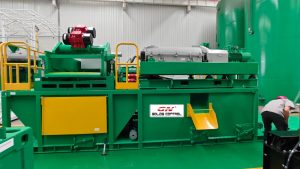
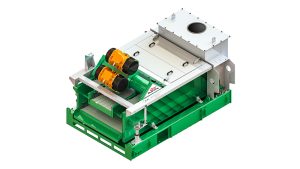
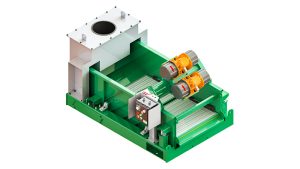
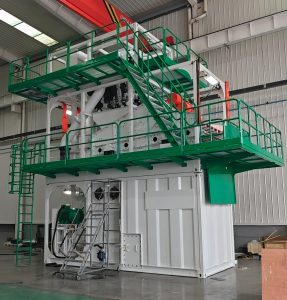
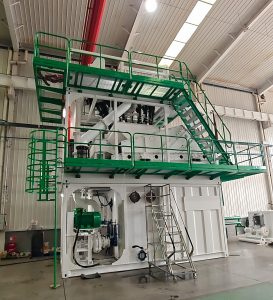
GN Solids Control has successfully provided the GNTBM-500B slurry separation system for a tunnel boring machine (TBM) project in the Middle East. Designed for efficient slurry treatment and solid control, the system helps contractors maintain stable excavation performance while reducing waste disposal costs.

The GN GNTBM-500B slurry separation system is engineered to separate solids from excavated slurry through a multi-stage treatment process. The slurry generated during TBM operations is first transferred to the system by a slurry pump and passes through a shale shaker for primary separation. Larger particles are removed, while finer slurry enters the treatment tank for further processing.

The processed slurry is then pumped into hydrocyclones, where centrifugal force separates heavier solids from the liquid phase. The separated solids are discharged for further drying, while the cleaned slurry returns to the system for continuous circulation and reuse. An automatic liquid level control system helps maintain stable operation and improves treatment efficiency.

For TBM tunneling projects in challenging environments, the GN GNTBM-500B provides reliable slurry management, efficient solid removal, and reduced fluid consumption. This successful application in the Middle East demonstrates GN Solids Control’s capability to deliver customized slurry separation solutions for global underground construction projects.

GN 22 Inch Decanter Centrifuge for Africa Tank Bottom Oily Sludge Treatment

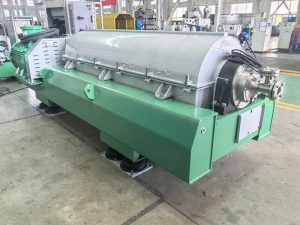
Across Africa’s oil storage terminals and refineries, tank bottom oily sludge has long become a tough operational and environmental headache. Crude sediment accumulates at tank bottoms year-round, reducing storage capacity, corroding tank walls, and creating hazardous waste that violates local environmental regulations from Nigeria to Ghana and South Africa. Conventional gravity settling and manual cleaning deliver low oil recovery, high labor costs and large residual waste volume. Today, the GNLW554-VFD large-bowl variable-frequency drive decanter centrifuge stands out as a reliable, cost-effective separation equipment tailored to African oilfield sludge treatment demands.
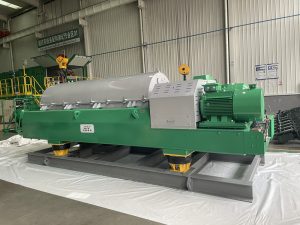
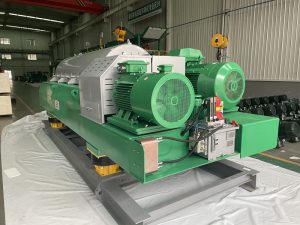
As GN Separation’s flagship 22-inch (550mm bowl diameter) continuous decanter model, the GNLW554-VFD is engineered for 24/7 heavy-duty operation under Africa’s high-temperature, dusty field conditions. Its core advantage lies in the full VFD independent control system, which allows on-site operators to adjust bowl rotating speed and differential scroll speed in real time. Tank bottom sludge varies drastically in viscosity, solid content and oil proportion due to different crude sources; the flexible VFD setup optimizes centrifugal G-force and conveying torque to maintain consistent separation efficiency regardless of fluctuating feed materials.
The working flow fits perfectly into standard African sludge treatment lines. After heating, dilution and polymer conditioning, tank sludge enters the rotating bowl. Powerful centrifugal force quickly stratifies oil, water and heavy solids. The wear-resistant spiral conveyor continuously discharges dry sludge cake, while clarified oil and water flow out through separate outlets. Recovered crude can be recycled back to storage tanks, cutting raw material loss; dewatered solid waste volume shrinks by over 60%, slashing transportation and landfill fees for African operators.
Built with tungsten carbide protection on scroll flights and discharge ports, this centrifuge resists abrasion from gritty tank sediment, extending service life and lowering frequent maintenance costs—a critical merit for remote African sites with limited component supply. Unlike outdated fixed-speed centrifuges, its VFD design also cuts idle power consumption by nearly 20%, easing pressure on unstable local power grids common in many African oil regions.
For African energy enterprises balancing resource recovery, waste reduction and environmental compliance, the GNLW554-VFD decanter centrifuge delivers dual gains: maximized oil recycling revenue and simplified hazardous waste compliance. As more oil facilities adopt mechanical centrifugal separation instead of inefficient traditional methods, this large VFD decanter will remain a core equipment to advance sustainable tank bottom sludge management across Africa’s petroleum industry.

GN Vacuum Degasser and Shale Shakers for Middle East Client

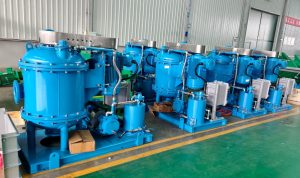
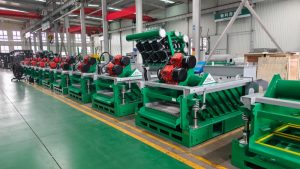
GN Solids Control recently supplied a set of solids control equipment, including a vacuum degasser and shale shakers, for a valued client in the Middle East. The equipment will be used in an oilfield drilling fluid treatment system to help improve mud performance, reduce drilling risks, and ensure stable operation under demanding site conditions.

In drilling operations, drilling fluid plays a critical role in carrying cuttings, cooling the drill bit, maintaining wellbore stability, and controlling formation pressure. However, when drilling fluid returns from the wellbore, it often contains drilled solids, gas, and other unwanted contaminants. If these are not removed efficiently, they may affect mud properties, reduce drilling efficiency, and increase operating costs. Therefore, reliable solids control equipment is essential for modern drilling projects.

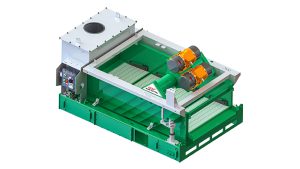
The shale shaker is the first-stage solids control equipment in a drilling mud system. GN shale shakers are designed to remove large drilled cuttings from the returned mud before the fluid enters downstream equipment. With high vibration strength, durable screen panels, and a robust structure, GN shale shakers provide efficient separation performance and stable operation. The equipment is suitable for harsh drilling environments and can help reduce the load on subsequent solids control equipment.

For this Middle East project, GN shale shakers are built with a heavy-duty frame, reliable vibration motors, and user-friendly operation features. The shaker deck angle can be adjusted according to site conditions, helping operators achieve better balance between solids discharge and liquid recovery. GN composite frame shaker screens are also available to support longer screen life and lower maintenance cost.

In addition to shale shakers, GN supplied a vacuum degasser for the client’s drilling mud system. The vacuum degasser is mainly used to remove entrained gas from gas-cut drilling fluid. If gas remains in the mud, it may cause mud density fluctuation, pump cavitation, inaccurate mud weight measurement, and potential safety risks. By removing gas effectively, the vacuum degasser helps restore mud density and improves the performance of the entire circulation system.

GN vacuum degasser adopts a self-suction design and does not require an additional feeding pump in many standard applications. The drilling fluid is drawn into the degassing chamber under vacuum, where gas is separated from the liquid phase and discharged safely. The treated mud then returns to the active mud system for reuse. This design helps simplify system layout and reduce energy consumption.

The Middle East oil and gas market has strict requirements for equipment reliability, safety, and environmental performance. GN solids control equipment is widely used in oilfield drilling, workover, trenchless drilling, and waste mud treatment projects. With rich manufacturing experience and international project references, GN is able to provide customized solids control solutions according to different drilling conditions, mud properties, and client requirements.

The successful supply of GN vacuum degasser and shale shakers to this Middle East client once again demonstrates GN’s capability in providing practical, reliable, and cost-effective drilling fluid treatment equipment. GN will continue to support global drilling contractors and oilfield service companies with high-quality solids control equipment and professional technical service.

Hydraulic Drive Mud Centrifuge and Cuttings Dryer for Asia Client

As Asia’s oil and gas, geothermal, and drilling industries continue to expand, the demand for reliable, high-efficiency solids control and waste management equipment has grown rapidly. To meet regional operational challenges and strict environmental regulations, GN Solids Control has delivered customized hydraulic drive mud centrifuges and cuttings dryers for multiple Asian clients, delivering stable performance, cost savings, and eco-friendly drilling solutions.
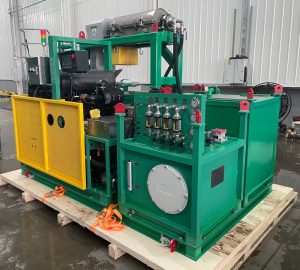
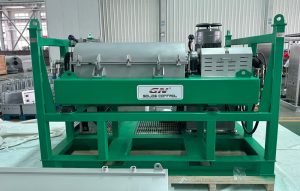
Different from traditional electrically driven models, GN’s full hydraulic drive decanter centrifuge adopts advanced Swiss VISCOTHERM hydraulic technology, featuring stable power output and strong anti-interference capability. It perfectly adapts to Asia’s complex working conditions, including high-temperature environments up to 55℃, unstable voltage supply, and heavy mud processing scenarios. Equipped with premium SKF and FAG bearings as well as tungsten carbide wear-resistant components, the equipment effectively resists dust and impact wear, greatly extending service life and reducing frequent maintenance downtime.
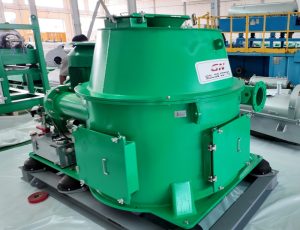
The supporting GN cuttings dryer further optimizes the entire drilling waste treatment process. Working in tandem with the hydraulic centrifuge, it minimizes oil-on-cuttings (OOC) residues, enabling treated cuttings to meet local Asian environmental discharge standards. The integrated system efficiently recycles reusable drilling mud, drastically cutting fresh mud procurement costs and waste transportation expenses for onshore and offshore drilling projects.
Safety and operational flexibility are core advantages favored by Asian clients. The three-layer overload protection system covering gearbox, hydraulic coupler and electric control panel ensures zero-risk continuous operation. The compact skid-mounted design allows quick installation and flexible mobility, suitable for mountainous, desert and offshore drilling sites across Southeast Asia, Middle East Asia and other regional areas.
With tailored design for Asia’s climate, site conditions and environmental policies, GN’s hydraulic drive mud treatment system has become a cost-effective and sustainable choice for local drilling enterprises. Moving forward, GN Solids Control will continue to provide high-quality equipment and localized after-sales support to empower more Asian clients with efficient, safe and green drilling operations.

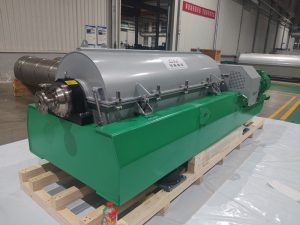
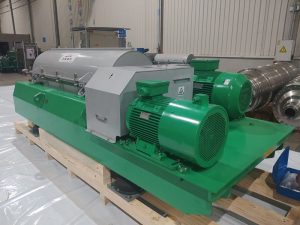
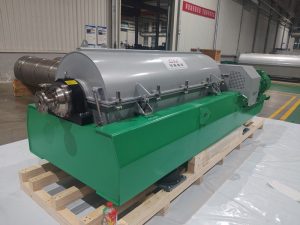
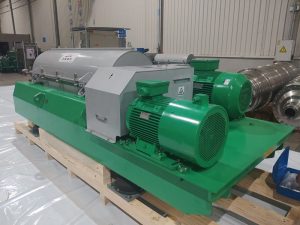
POTATO SLICES FLUSHING WATER STARCH SEPARATION CENTRIFUGE FOR DOMESTIC FOOD PLANT

In potato processing plants, slice washing generates significant volumes of wastewater containing suspended starch solids. Discharging this water without treatment wastes both a recoverable byproduct and a valuable water resource. A recent GN shipment successfully brought  a solution to this issue by using decanter centrifuge.

GN supplied a decanter centrifuge sized for the facility’s throughput. The unit operates on the counter-current principle, with the bowl and screw conveyor rotating at differential speeds controlled by a variable frequency drive(VFD). This arrangement allows the separation parameters to be adjusted as the feed characteristics vary with production rates. The bowl length-to-diameter ratio, exceeding 3.0, provides sufficient residence time for fine starch particles to settle out of suspension.

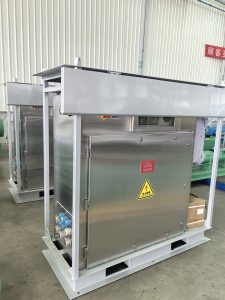
Several design features make this installation practical for food processing duty. The bowl cylindrical and conical sections are manufactured from Duplex Stainless Steel 2304, with other wetted parts in SS304—materials selected for corrosion resistance and cleanability. Tungsten carbide tiles protect the screw conveyor at wear points, extending service intervals. The PLC-controlled VFD cabinet provides consistent operation with minimal operator attention.

This installation illustrates a broader capability: GN supplies decanter centrifuges for starch recovery from potato, wheat, corn, and root crop processing, with models available for different capacity ranges. For this customer, the result is reduced water consumption, recovered product value, and a separation process that runs with minimal supervision.

Potato slices flushing water starch separation centrifuge for domestic food plant

For potato chip, French fry and potato snack manufacturers, excess surface starch on cut potato slices has long been a production headache. Unremoved starch leads to sticky slices, uneven frying, dark finished products, wasted raw materials and heavy water pollution. Today, domestic potato slices flushing water starch separation centrifuges have become core equipment for small and medium-sized food factories, solving starch washing and recovery bottlenecks efficiently and affordably.
This integrated centrifuge combines continuous slice flushing and centrifugal starch separation into one streamlined unit, perfectly matching domestic food plants’ medium-scale production lines. Its working logic is straightforward. After potatoes are sliced, raw slices enter the water flushing tank to strip free starch off surfaces. The starch-laden wastewater flows into the centrifuge chamber, while clean potato slices are automatically conveyed to blanching or frying stations. Inside the stainless steel rotating bowl, high centrifugal force rapidly separates fine starch particles from washing water. Concentrated starch slurry is collected for drying and secondary sales, and clarified water circulates back to the flushing tank for repeated use.
Compared with traditional manual soaking and static sedimentation tanks, this domestic centrifuge brings three decisive advantages.
First, outstanding separation efficiency. It removes over 92% surface starch from potato slices within seconds, eliminating sticking and discoloration during frying, greatly upgrading snack texture and appearance.
Second, remarkable cost and resource savings. Recovered potato starch creates extra revenue for factories, while water recycling cuts fresh water consumption by up to 85% and lowers wastewater treatment fees. Third, food-grade durable design. All parts touching materials adopt 304 stainless steel, complying with national food safety standards. The compact structure occupies limited workshop space, with low noise and energy consumption, ideal for domestic small food processing workshops.
Sustainability is another highlight of this equipment. Direct discharge of starchy wastewater triggers eutrophication and environmental penalties. The centrifuge traps nearly all starch waste, reducing organic pollutant emissions sharply. Its fully enclosed running structure also avoids slice oxidation, preserving the natural pale color of potato products without extra chemical additives.
For domestic food plant operators pursuing stable output, product quality and green production, investing in a potato slices flushing water starch separation centrifuge delivers long-term return. It simplifies potato processing workflows, reduces labor reliance, turns waste starch into valuable byproducts, and helps factories meet stricter food and environmental regulations. As the potato snack market expands, this cost-effective separation machine will remain an irreplaceable piece of core processing equipment for local food manufacturers.